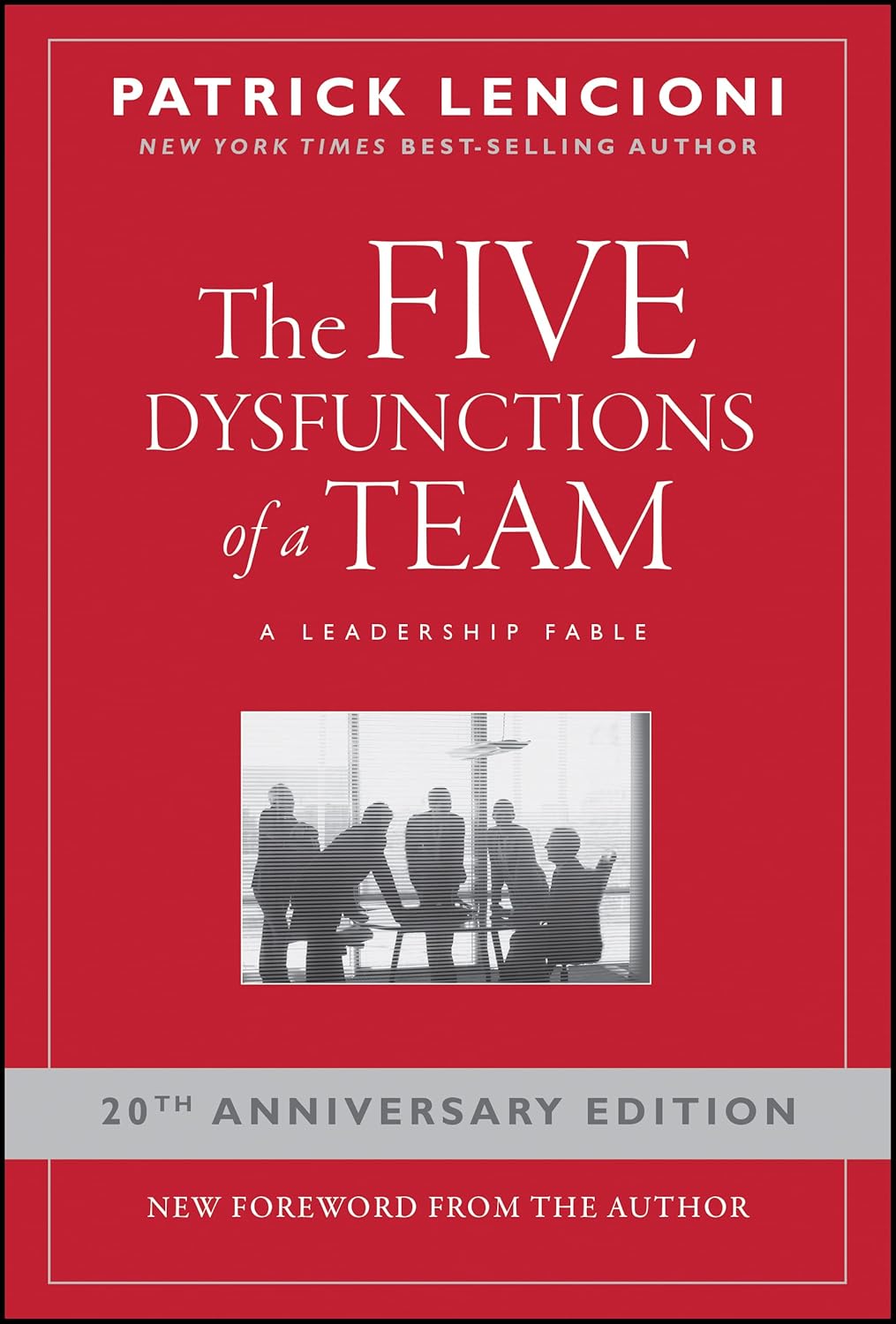
This book has shaped our team’s culture over the years. Even the employees who haven’t read it are familiar with the language, because it’s become part of how we talk about our team and how we resolve conflict.
The author tells a fable. A story about an executive team that has become dysfunctional, and the steps they take to change course. It’s a genuine page turner, which is not something we usually say about business books.
I believe reading fiction can make you a better leader, and this book is a rare version of fiction that’s specifically written to teach leadership. So you get both.
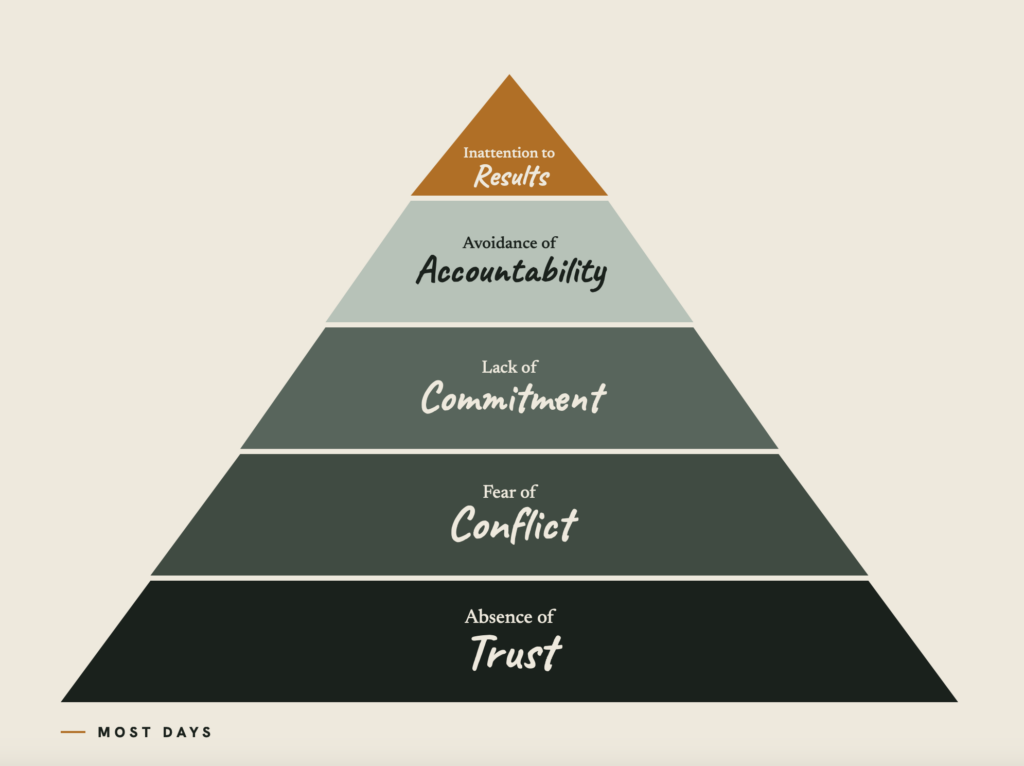
The book will help you and your team identify and overcome the five dysfunctions. If any of the issues in the pyramid below are present on your team, I’d highly recommend picking it up. I’ve never heard of a team or a company getting all of these right 100% of the time. So I think every team can benefit from the lessons here.
Overcoming the Five Dysfunctions
Dysfunction #1: Absence of Trust
To me, trust doesn’t just mean that you can count on each other. It means that you can speak without fear of being ridiculed. Share your ideas and trust your team to hear you out. Speak up about an issue without fear of losing political points or being siloed.
Dysfunction #2: Fear of Conflict
After we develop more trust, we’re able to speak our minds without fear. And when we do have conflict, we can do it with respect. We are able to have thoughtful disagreement, which always land on a better solution than when decisions are made in a vacuum, or when one person talks and everyone just nods their head.
Dysfunction #3: Lack of Commitment
Because we’re able to have healthy conflict, when we arrive at a decision, we have more buy-in. Once everyone feels heard, and has done their best to understand the differing opinions, we can all move forward in the same direction. If you skip the conflict, than you don’t get to a true commitment.
Dysfunction #4: Avoidance of Accountability
When we have buy-in across the board, and the plan fails, the whole team holds themselves accountable. If there isn’t 100% buy-in, it’s more likely that some will say “well, that wasn’t my fault, I didn’t like that idea in the first place”, which erodes trust and puts us back at dysfunction #1.
Dysfunction #5: Inattention to Results
When we tryst each other, engage in healthy conflict, commit, and take responsibility, we will inevitably be focused on the same goal. If one piece of the puzzle is missing, we all may be rowing the boat, but in different directions.
Conclusion:
Once your team identifies the dysfunctions they struggle with, you can set new standards for how you function and communicate. In a healthy team, the pyramid becomes:
“Our team trusts each other enough to have real debate and conflict. They commit to goals even when consensus isn’t perfect. They hold each other accountable to those goals, which leads to a shared focus on results.”
That sounds nice, right? Reading this book, discussing with your team and putting the lessons into practice can get you there.